Historical Anecdotes
Step into the history of the Sorel-Tracy region through a collection of fascinating anecdotes and iconic locations. Behind every building, street, and landscape lies a unique story that has shaped the identity of our region.
Sorel Industries Limited
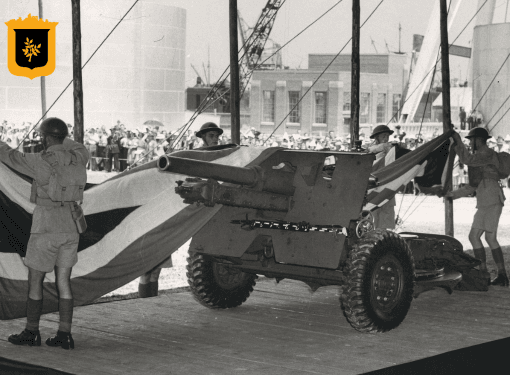
In 1937, as tensions were rising in Europe, brothers Joseph, Édouard, and Ludger Simard decided to establish an armaments factory on the former Government shipyard they had acquired a few years earlier. Through a partnership with French industrialist Eugène Schneider and the Canadian government, the Simard brothers secured a first contract from the British War Office.
The 25-pounder guns were assembled at the mouth of the Richelieu River, far from the conflict. The first series was presented to Canadian government representatives during a ceremony on July 1, 1941. Impressed by the quality of the product, the War Office increased its initial order, and Sorel Industries Limited went on to manufacture more than 1,000 25-pounder guns during the war.
One of these cannons can still be seen today at Parc Les Forges in Saint-Joseph-de-Sorel.
SHPS - Fonds Sorel Industries, P001, S8, SS7, D1
Turcotte Bridge
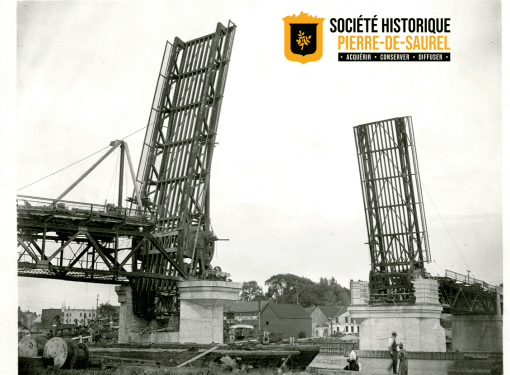
At the beginning of the 20th century, residents of the region had to rely on the Pont des Chars or boats to cross the Richelieu River. While these methods suited workers commuting to the shipyards in Saint-Joseph, it quickly became clear that the lack of proper road infrastructure was slowing local economic development.
In an effort to stimulate regional economies during the Great Depression, the Quebec government adopted the “Grands Ponts” (Great Bridges) Act in 1931, funding the construction of seven bridges across the province, including the one in Sorel.
Built in 1932 at a cost of $750,000, the bridge was named in honour of local politician and businessman Joseph-Célestin-Avila Turcotte. From the moment it opened, the bridge had the desired impact, as Sorel and Saint-Joseph-de-Sorel experienced significant growth in the years that followed.
SHPS - Fonds Madelaine St-Martin P068, S4, SS3, D2
Governors’ House
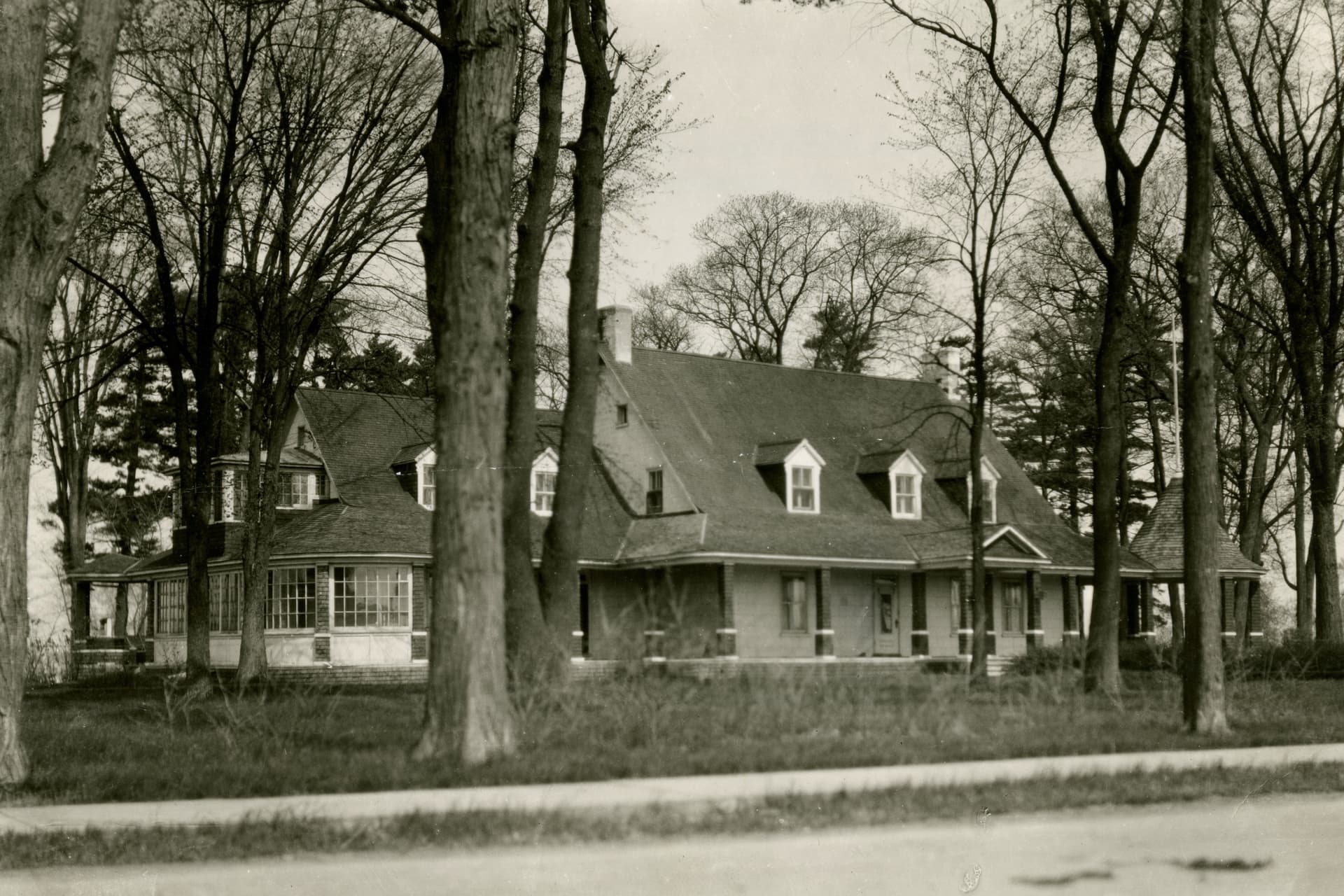
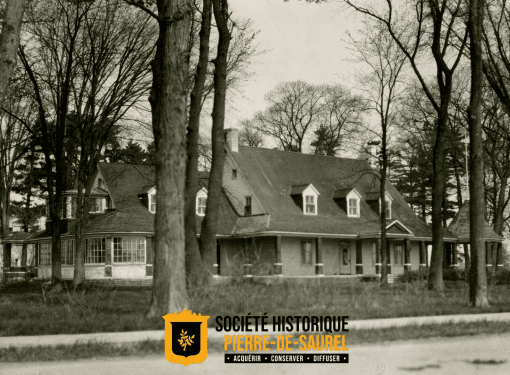
In 1781, Frederick Haldimand, Governor of the Province of Quebec, acquired a house under construction on the outskirts of Sorel to serve as a residence for the commander of the local garrison.
Baron Friedrich von Riedesel, who led a group of German mercenaries hired by the British Crown during the American Revolutionary War, lived there. During his stay at the Governors’ House, the first Christmas tree in North America was erected.
After the departure of Baron Riedesel and his family in 1783, the house returned to Governor Haldimand, who used it as both a manor and a residence for visiting dignitaries. It was later used as a summer residence for colonial governors.
Nearly a century after the last governor left, the Governors’ House was designated a historic site by both provincial and federal governments.
SHPS - Fonds Institutionnel, I002, S10, SS6, D1
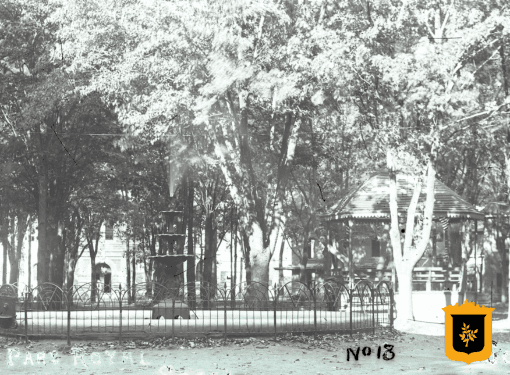
Royal Square
In the 1780s, Governor Haldimand commissioned a new urban plan for Sorel to better structure its growth. Designed by British army engineer and major John French, the plan features an orthogonal grid inspired by American colonial cities such as Philadelphia and Savannah, where streets intersect at right angles.
At the heart of this layout was a parade ground where the garrison could train and march. Around 1860, following the departure of the military, the City of Sorel acquired the space and transformed it into a public park.
For over 150 years, the Carré Royal has been the city’s green heart and a central gathering place for residents and visitors alike.
SHPS - Fonds Luc St-Martin, P060, S1, SS5
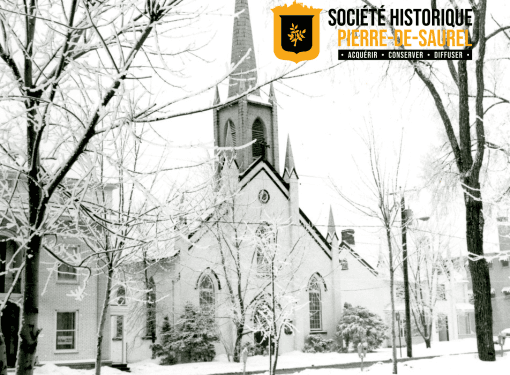
Christ Church
The arrival of the British garrison and Loyalists in the late 18th century brought a strong Protestant presence to Sorel, which had previously been predominantly Catholic. Without a place of worship, the Protestant community initially gathered in a private home before moving, in 1789, into a newly built church—one of the oldest Anglican parishes in Canada.
However, due to the rapid growth of the English-speaking population, the building quickly became too small. Following efforts by the Christ Church Anglican parish, construction of a new church began in 1842.
Designed by architect John Wells, the building reflects the Gothic Revival style popular in the British world at the time. The church and its rectory, built with bricks from Sorel’s Sheppard brickyard, were inaugurated in 1843. Both buildings have been recognized as heritage properties since 1959.
SHPS - Fonds La Voix, P027, S11, SS7, SSS1, D4
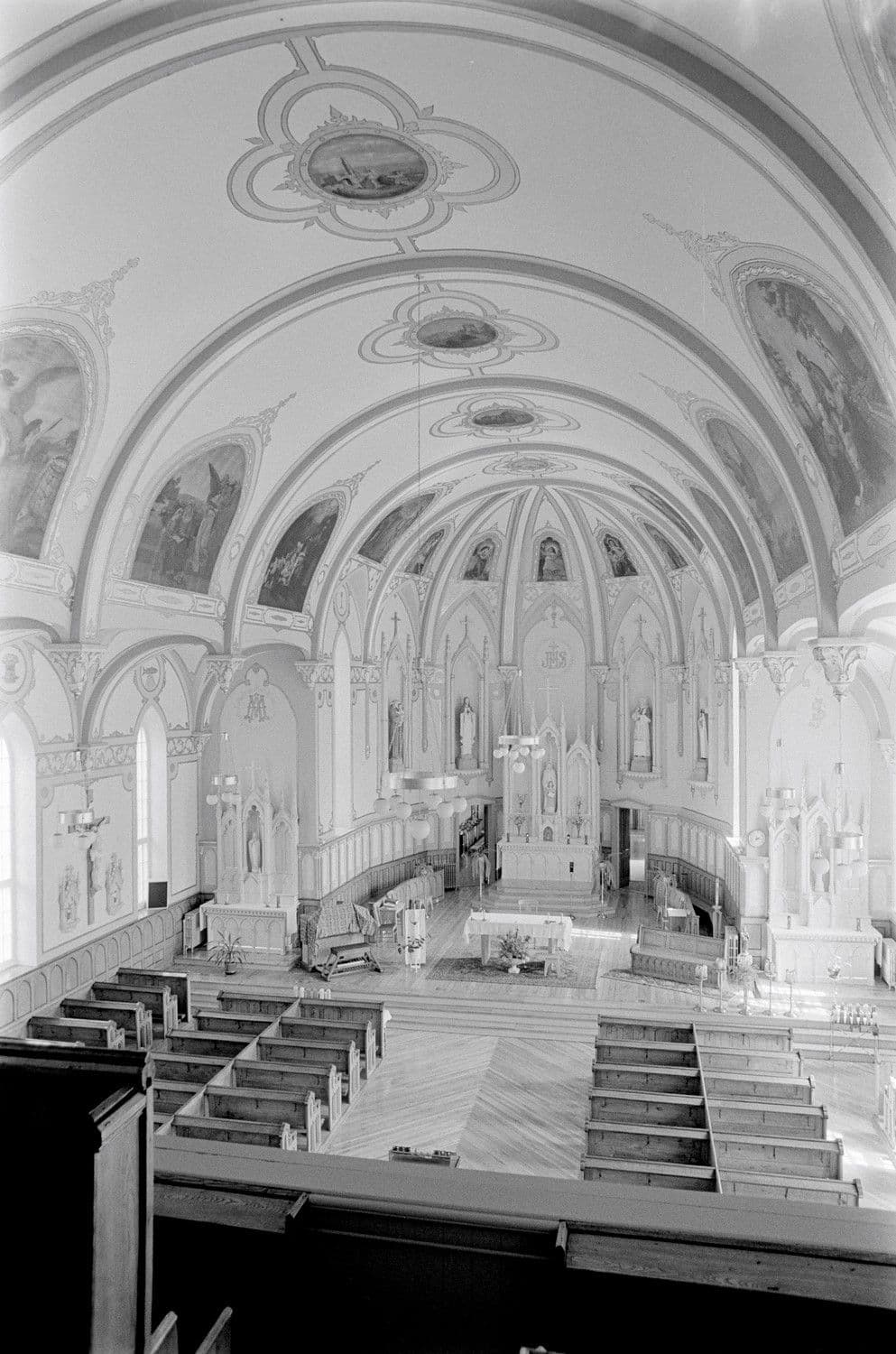
Sainte-Anne Church
In response to population growth in the Chenal du Moine area during the second half of the 19th century, Father Millier initiated the creation of a new parish, officially established on November 4, 1876.
Two years later, construction began on a new church after securing the land. The building was designed by renowned architect Louis-Zéphirin Gauthier, who contributed to many religious buildings in the Saint-Hyacinthe diocese, including the church in Saint-Ours and the Collège Sacré-Cœur in Sorel.
Construction progressed quickly, allowing the first mass to be held on March 9, 1879. The first baptism, that of Joseph Letendre, followed just nine days later. While the exterior was completed in the early 1880s, the interior decoration—created by artist Marc-Aurèle Suzor-Côté—was not finished until about a decade later.
BAnQ - E10,S44,SS1,D80-559 - Marc Lajoie, 1980
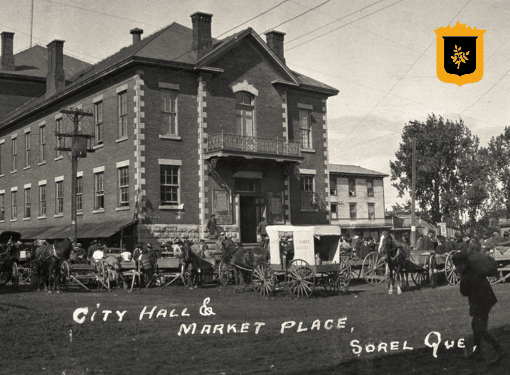
Richelieu Market
The first market was built in 1818 at the corner of King and Augusta streets. As a key hub for agricultural trade in the Sorel region, the building was rebuilt and expanded in 1843, 1858, and 1882 to meet the needs of a growing population.
In 1851, a performance hall was added. Like many public markets during Quebec’s golden age of market halls, it also housed Sorel’s municipal council from 1848 until the construction of City Hall in 1930.
The fourth Richelieu Market was destroyed by fire on December 26, 1929, and rebuilt the following year based on plans by architects Félix Racicot and Jean-Baptiste Soucy. While it no longer served a political function, the building continued to host commercial and cultural activities until 2009.
Since 2017, it has been home to Théâtre Azimut and the George-Codling Hall.
SHPS - Fonds Luc St-Martin, P060, S1, SS5
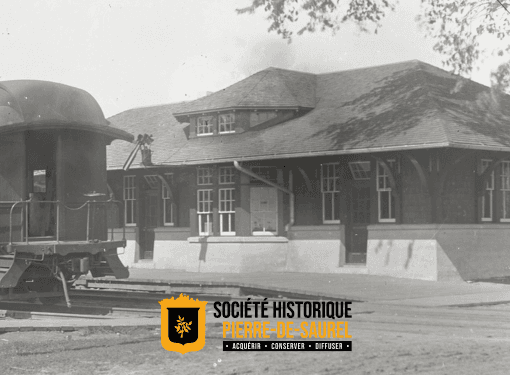
Former Sorel Train Station
As early as the mid-19th century, Sorel sought to connect to the expanding railway network. Over the following decades, several links were established, including Sorel–Sutton in 1881 and Sorel–Iberville in 1895.
However, it wasn’t until 1898—two years after the construction of the Pont des Chars—that the train station on King Street was built. That same year, a railway connection between Sorel and Montreal was established.
In the late 1960s, CN abandoned the rail line, and about a decade later, the Sorel–Montreal route ceased operations entirely. Today, the former station building is home to the Marché Urbain Pierre-De Saurel.
SHPS - Fonds Luc St-Martin, P060, S1, SS5
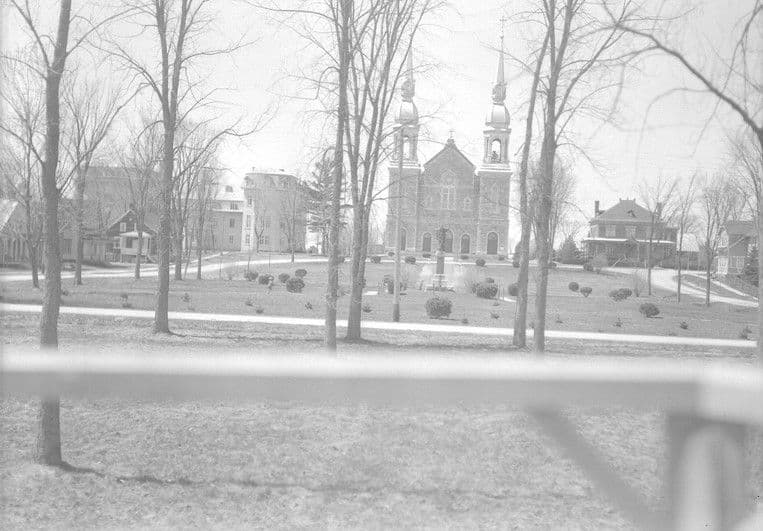
Massueville Royal Square
Did you know that Sorel isn’t the only place in the region with a “Carré Royal”? There is also one in Massueville!
According to a notarial deed signed on June 20, 1835, seigneur Gaspard-Aimé Massue donated a parcel of land to the parish for the construction of a church, presbytery, and convent. He also donated a neighbouring lot to create a public square, offering residents a beautiful view of the church and space for their horses.
This donation came with one condition: no permanent structures could be built there, except for a small market hall.
Today, this green space still exists in the heart of Saint-Aimé parish and remains a central gathering place, hosting various activities including annual agricultural fairs.
BAnQ - E6,S7,SS1,D2,P30560 - Bruno Potvin, 1946
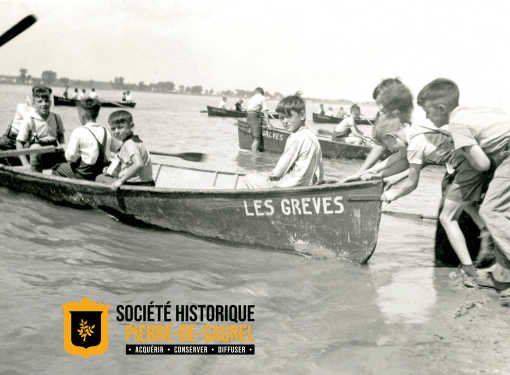
Contrecoeur Beaches (Grèves)
In 1912, Abbé Adélard Desrosier acquired former sand pits located along Rang de la Misère in Contrecoeur. Inspired by popular vacation resorts in Europe and the United States, he envisioned creating a summer camp where young people from Montreal and beyond could enjoy a healthy outdoor environment.
Alongside the Colonie des Grèves de Contrecoeur, the site quickly expanded to include other similar establishments, such as the Colonie Sainte-Jeanne-d’Arc starting in 1926.
Although only six children attended during its first year, the camp rapidly gained popularity, welcoming over 700 campers annually by 1933—a level of attendance that continued for more than three decades.
Despite changes in administration and ownership over time, the Colonie des Grèves remains active today, making it the oldest continuously operating summer camp in North America.
SHPS - Fonds Colonie des Grèves, P295, S5, SS1, D16